WEB OVERVIEW · WEBSTER REALTY ADVISORS
Your landlord relationship is not your renewal strategy
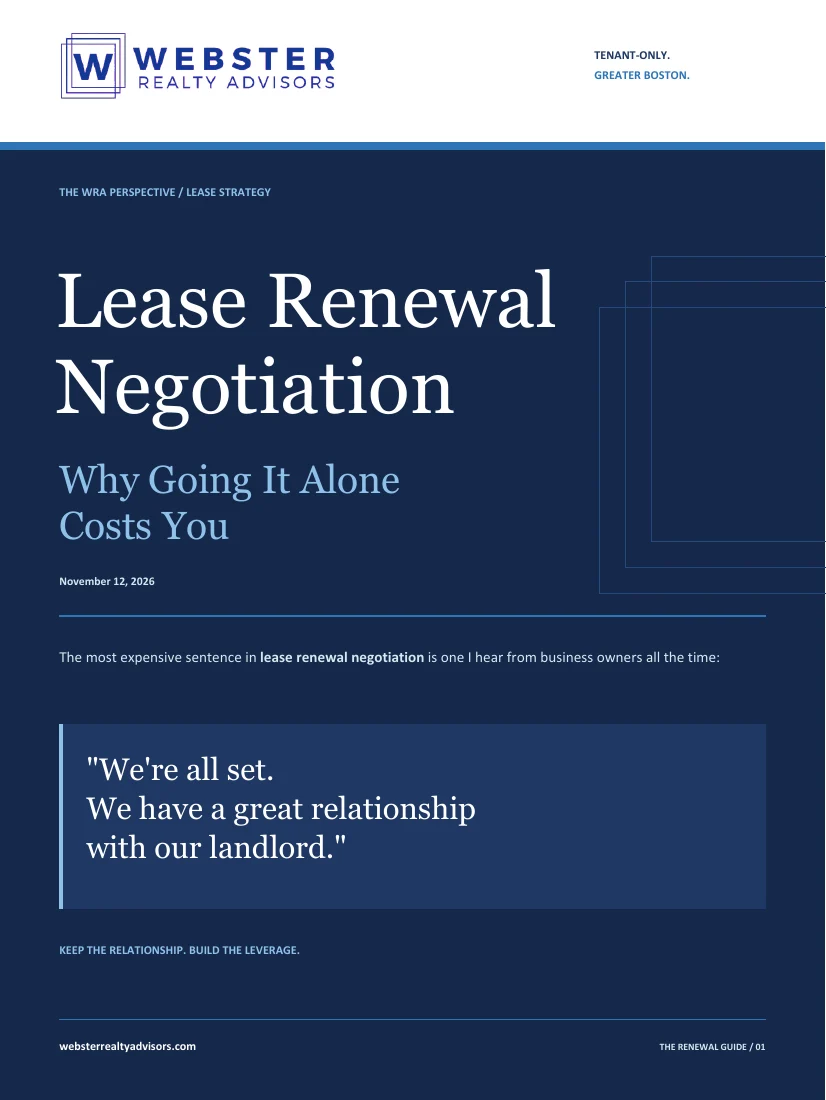
“We're all set. We have a great relationship with our landlord.” WRA's renewal guide starts with a familiar conversation. Keeping that goodwill makes sense. Letting it replace a structured financial comparison does not.
The landlord evaluates the building's income and risk. Your company evaluates its own operating costs, flexibility, and future requirements. A productive renewal process makes those business questions explicit instead of relying on a friendly conversation to resolve them.
Separate the relationship from the economics
The person resolving day-to-day building issues may not be the person approving rent and concessions. Property management and ownership decisions serve different functions. Ownership, financing, and the people making those decisions can also change during your tenancy.
Maintain the working relationship. At the same time, develop an independent picture of the market, the cost of staying, and the cost of moving. That gives both sides something more useful to discuss than whether an opening proposal feels fair.
Small rent differences compound
Headline rent can obscure a weaker concession package, higher annual increases, or operating-expense exposure. The guide illustrates how even a $1.00/SF first-year difference can add up.
Illustrative five-year additional base rent: 10,000 SF × a $1.00/SF first-year gap, with that gap increasing 3% annually.
| Lease year | Annual difference | Cumulative difference |
|---|---|---|
| 1 | $10,000.00 | $10,000.00 |
| 2 | $10,300.00 | $20,300.00 |
| 3 | $10,609.00 | $30,909.00 |
| 4 | $10,927.27 | $41,836.27 |
| 5 | $11,255.09 | $53,091.36 |
Illustrative math only, not a forecast or a promise of savings. Assumes a constant 10,000-SF billed area, five years, and 3% annual increases in the rent gap. Undiscounted base rent only; excludes operating expenses and other costs. Calculations use unrounded amounts.
Compare the full package using net effective rent, and confirm the measurement basis with the USF vs. RSF calculator.
Your expiration date is not your only deadline
Find the actual renewal-option notice deadline, delivery requirements, and pricing language in your signed lease. Do not substitute a general planning timeline for the contractual dates. Ask your attorney to review the notice requirements before you rely on an option.
The e-book recommends beginning 18 to 24 months before expiration to preserve time for alternatives. Your schedule should reflect the size and complexity of the requirement, construction needs, and any earlier notice deadline. If less time remains, review the situation promptly rather than assume there are no options.
Exercising an option and negotiating a new renewal agreement are different paths. An option generally follows the terms already agreed; changing those terms may require a separate agreement. Review both paths before committing.
Start with three dates: lease expiration, the opening of any notice window, and the final notice deadline. Then work backward through tours, proposals, design, approvals, and delivery. See why time and options create leverage.
Compare the whole renewal offer
The guide's renewal scorecard focuses on four areas. Put each into the same comparison framework for your current building and any credible alternative.
- Total rent: Starting rate, annual increases, free rent, and net effective rent.
- Concessions: Improvement allowances and free rent, assessed against relevant comparable transactions.
- Operating expenses: The base year, controllable-expense caps, allocation methods, and audit rights.
- Lease amendment: Existing clauses that carry forward and provisions worth revisiting with counsel.
A short amendment can extend old restrictions for years. The review should cover the business terms and the obligations that continue, not just the new expiration date. Our base-year lease guide explains one component of that cost review.
Make the alternatives credible
“We're looking around” is not the same as having a viable alternative. A useful process moves from requirements to tours, written proposals, side-by-side costs, and informed negotiations. The alternative must work for the business if you actually need to use it.
The landlord's potential vacancy, improvement costs, and replacement-tenant concessions help explain why retaining a tenant can have value. That does not guarantee any particular outcome; the property's circumstances and your alternatives still matter.
The downloadable November 12, 2026 edition includes a Q2–Q3 2026 market snapshot. Treat those figures as historical context, not a current quote or a substitute for submarket-specific evidence.
Keep the goodwill. Put an advisor on your side.
A tenant representative can organize the market process and handle business negotiations while you maintain the day-to-day landlord relationship. Confirm fees and responsibilities in writing before engaging an advisor, and ask whether the firm also represents landlords.
WRA represents tenants exclusively. Learn about our lease renewal advisory services, or explore the related e-book, The 8 Biggest Myths About Tenant Representation.
If your renewal is approaching, request a free lease review before the opening proposal becomes the default plan.
TAKE THE GUIDE WITH YOU
Read it. Share it. Bring it to the decision.
The original 9-page PDF includes WRA's full perspective and visual examples.
Download the complete PDF ↓This web overview is adapted from the supplied WRA e-book; the downloadable PDF is the original, unchanged edition. General business information, not legal advice. Compensation arrangements, notice deadlines, renewal rights, and lease obligations depend on the written agreements. Historical market figures in the PDF are not live market data.